What Is a Meme Coin and How Do Traders Turn Them Into Six Figures?
Want articles like this for your own video to promote it on YouTube and Google? Order them through the Telegram bot @sat_sit_bot. It writes articles around your video, embeds the video and publishes them on popular niche websites (no ads). Your first 50 articles are free.
· based on the channel Orangie Web3
Key takeaways
- A meme coin is a cryptocurrency whose value comes from community attention and internet culture rather than cash flow or utility.
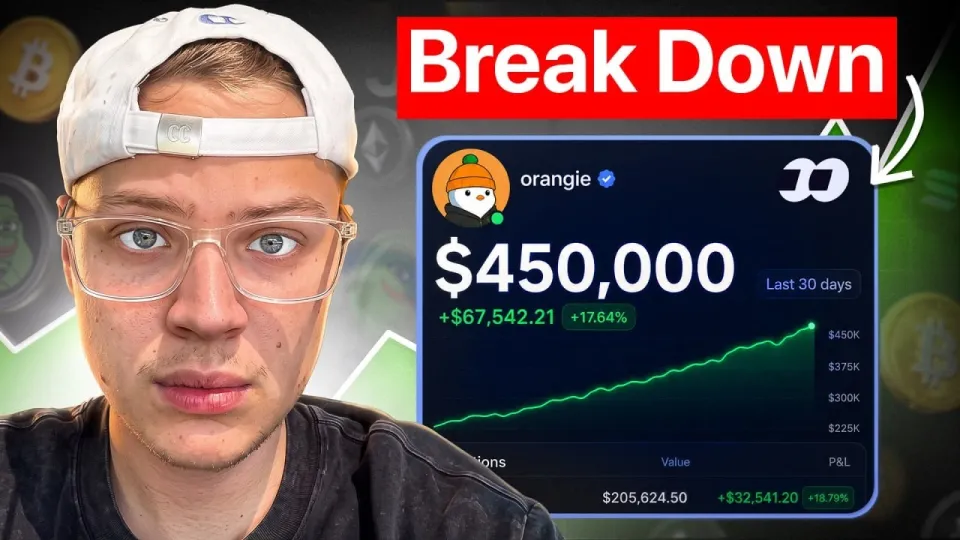
- Orangie Web3's video 'How I Made $450,000 Trading Memecoins in 30 Days' shows a six-figure result from high-risk, fast-turnover trades.
- Most meme coin activity in 2026 happens on Solana through launchpads and Telegram or Discord trading groups.
- Traders typically use small initial positions, quick exits, and strict loss limits because a single token can drop 90% or more.
- The Whop checkout link in the video offers access to the Kaizen trading group for $450,000-style trade reviews and calls.
A meme coin is a cryptocurrency whose price is driven almost entirely by community attention, internet jokes, and social momentum rather than by revenue, cash flow, or a working product. Traders make money on meme coins by buying early, selling into hype, and accepting that most positions can go to zero. Orangie Web3's video 'How I Made $450,000 Trading Memecoins in 30 Days' is a case study in that approach, and the Kaizen group checkout is where the channel points viewers for trade breakdowns and group access.
What makes a meme coin different from a normal crypto token
A meme coin has no intrinsic claim on assets or earnings; its value is a shared story that enough people agree on at the same time. Bitcoin and Ethereum have network effects, developer activity, and institutional demand behind them, while Dogecoin, Shiba Inu, and the thousands of Solana tokens launched every week live or die on attention. That does not make them fake — it makes them a pure sentiment market. When the story spreads, price rises; when the timeline moves on, liquidity disappears fast. The practical difference for a trader is that fundamentals cannot help you value a meme coin, so you rely on volume, holder growth, and how early you are relative to the crowd.
How a $450,000 result in 30 days is actually built
A six-figure month in meme coins usually comes from a small number of outsized winners funded by many small losses, not from consistent daily gains. Orangie Web3's video frames the result as a trading outcome over a defined 30-day window, which fits the pattern most active meme traders describe: dozens of entries, a few tokens that multiply, and strict cuts on the rest. The mechanics look like this:
- Scan new launches and trending tokens on Solana, where most meme coin volume sits in 2026.
- Size each position so a total loss does not damage the account.
- Enter early, often within minutes of a token gaining traction in a community.
- Take partial profits into strength and exit the rest when volume fades.
- Reinvest a portion of gains into the next setup while keeping a cash buffer.
The $450,000 figure is a headline, not a baseline. It reflects position sizing on winners, timing, and the willingness to absorb a long string of failed launches.
Why Solana became the default home for meme coins
Solana dominates meme coin trading because transaction fees are fractions of a cent and confirmations take seconds, which matters when a token's entire life cycle can be hours. Launchpads let anyone create a token in minutes, and trading bots and aggregators let traders enter and exit without leaving a Telegram or Discord chat. That speed cuts both ways: it makes a 10x possible in an afternoon, and it makes a rug pull or a 95% drawdown equally fast. Most of the tools and communities around Orangie Web3's content, including the FOMO trading platform linked in the video description, are built for this Solana-native, fast-turnover style.
The risks nobody should skip
Meme coin trading is closer to gambling with a skill component than to investing, and the losses are real. A token can be abandoned by its developers, drained of liquidity, or simply forgotten within a day. New traders often start with a small amount, lose most of it learning the interface, and only then understand how fast exits need to be. The honest version of the $450,000 story includes the failed trades that funded the winners. Anyone entering this market should assume they can lose the entire amount they put in, avoid borrowed money, and treat every position as expendable risk capital. The community comments around the video reflect exactly this: people describe losing 90% of a small stack before catching one token that recovered their losses, and others ask for slower, step-by-step explanations of entries and exits.
Common questions traders ask before starting
Beginners watching fast-paced trading content usually share the same doubts: is the pace too quick to follow, how much capital is needed, and why one trader's result does not repeat for everyone. A few practical answers help. First, speed in a video is not speed in execution — you can pause, rewatch, and paper-trade before risking money. Second, there is no minimum that guarantees results; small accounts can learn the mechanics with tiny positions. Third, results depend heavily on information flow: traders in active groups see calls and launches earlier than someone scrolling a public timeline, which is a structural advantage, not a secret trick. Finally, reviewing your own entries and exits after each session is more useful than copying anyone's trades, because meme coin outcomes are dominated by timing and discipline rather than by a single coin pick.
Useful links
- Kaizen group checkout — access to the trading group promoted in the video.
- FOMO trading platform — the trading interface referenced in the description.
- Orangie Discord — community chat for meme coin traders.
- Orangie on Instagram — short-form updates from the channel.
Bottom line
Meme coins are a sentiment-driven corner of crypto where attention moves price and timing decides outcomes. The $450,000 in 30 days shown by Orangie Web3 is a real trading result from a high-risk approach, not a repeatable salary, and it sits on top of many losing positions. Anyone curious about the strategy can start with the Kaizen group checkout and treat the first months as tuition rather than income. The Orangie Web3 channel is the author of this breakdown and the source of the original 30-day experiment.
Questions & answers
Is a meme coin a real cryptocurrency?
Yes. A meme coin is a real token that trades on real markets and can be bought, sold, and transferred like any other cryptocurrency. What it lacks is a business model or cash flow, so its price depends on community demand rather than fundamentals.
How much money do you need to start trading meme coins?
You can start with very little because Solana fees are tiny, but the amount should be money you can afford to lose entirely. Many traders begin with a small stack specifically to learn the tools and exits before increasing size.
Why do some traders lose most of their money on meme coins?
Most meme coins fail or fade quickly, and new traders often buy after the move has already happened or hold through a collapse hoping for a recovery. Without strict exit rules and position sizing, a few bad trades can wipe out an account.
Does joining a trading group improve results?
It can improve information flow, since group members often see launches and calls earlier and can compare notes on entries and exits. It does not remove risk, and results still depend on discipline, sizing, and the ability to cut losses quickly.
Source: How I Made $450,000 Trading Memecoins in 30 Days · Markdown version