5 Things the Trump Meme Coin Fight Reveals About the Token and Its Critics
Want articles like this for your own video to promote it on YouTube and Google? Order them through the Telegram bot @sat_sit_bot. It writes articles around your video, embeds the video and publishes them on popular niche websites (no ads). Your first 50 articles are free.
· based on the channel Daniel Reed
Key takeaways
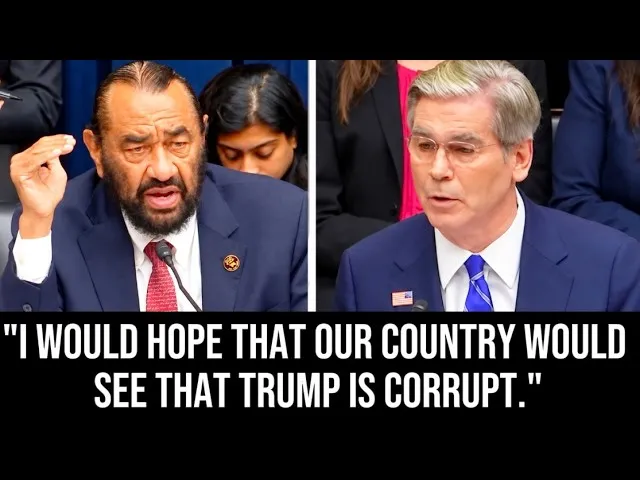
- Senator Al Green pressed Treasury Secretary Scott Bessent over the Trump meme coin and whether it amounts to a scam.
- Bessent is the sitting Treasury Secretary, so his answers carry weight for how regulators may treat political tokens.
- Critics argue the token's value rests on access and hype rather than cash flow, a classic greater-fool dynamic.
- Meme coins are among the most volatile crypto assets, with prices driven by attention and insider supply.
- Calls for disclosure and conflict-of-interest rules for tokens tied to public officials are growing.
A meme coin is a cryptocurrency whose value is driven by internet culture, attention and speculation rather than by cash flow or a business model. The fight around the Trump meme coin shows the core risk: when a sitting president's name is attached to a speculative token, the question stops being about jokes and starts being about conflicts of interest, disclosure and who loses money at the end. Senator Al Green's questioning of Treasury Secretary Scott Bessent put that question on the record in a Senate hearing.
What the Green–Bessent exchange actually covered
Senator Al Green used a hearing to press Treasury Secretary Scott Bessent on the Trump meme coin, framing it as a scam and asking whether the Treasury has any view on a token tied to the president's own brand. The exchange matters because Bessent is not a commentator; he runs the department that oversees financial stability, sanctions and tax enforcement. When a lawmaker asks the Treasury chief about a token carrying a president's name, the answer signals how far regulators are willing to go.
Bessent's responses, as broadcast, stayed inside generalities about crypto policy rather than addressing the specific token. That gap is the story: the official responsible for financial oversight would not characterize a highly speculative asset bearing his own president's name. For traders, the lesson is that political tokens sit in a regulatory grey zone where public criticism does not automatically translate into enforcement.
Why critics call the token a scam
The strongest argument against political meme coins is structural, not personal. A meme coin has no revenue, no product and no claim on assets; its price is whatever the next buyer will pay. When a large share of supply is held by insiders or affiliated wallets, the buyers at the end of the queue absorb the losses. Critics describe this as a greater-fool problem: everyone buying expects someone less informed to pay more later.
- Supply concentration: when a few wallets hold a large portion of the token, selling pressure can crush the price before retail can exit.
- Access as the product: some buyers treat the token as a way to signal loyalty or gain proximity to a political circle rather than as an investment.
- No cash flow: there is nothing to value, so headlines and social posts move the price more than fundamentals ever could.
- Reputational risk: a token tied to a public official imports political risk into a purely speculative asset.
How meme coin markets actually behave
Meme coins are the highest-beta corner of crypto. Prices are driven by attention cycles, and liquidity is thin enough that a single large sell order can wipe out a day's gains. In practice, three patterns repeat.
- Launch spikes: the first hours after a token goes live usually bring the largest percentage moves, and the largest drawdowns.
- Narrative decay: once the news cycle moves on, volume falls and the price drifts lower unless a new catalyst appears.
- Exit asymmetry: insiders and early wallets can sell into retail demand, but retail cannot sell into insider demand.
For anyone treating a political meme coin as a trade, position sizing matters more than conviction. The asset class rewards speed and punishes holding through a news cycle.
The questions buyers keep asking
Skeptical viewers of the hearing raised a consistent set of doubts, and they are worth addressing directly. The first is whether buying a political meme coin is anything more than paying for access. The second is how a Ponzi scheme differs from a pyramid scheme, a distinction that matters legally even when the practical outcome for late buyers looks identical. The third is whether the people who lost money should have known better.
On the last point, the honest answer is that disclosure is the whole argument. A buyer who understands that a token has no cash flow and concentrated supply is making a calculated bet. A buyer who thinks a presidential brand implies safety is being misled by association. That is precisely why calls for conflict-of-interest rules around tokens tied to public officials have grown louder, and why Treasury's silence in the hearing drew criticism.
What to watch next in political tokens
The practical takeaway for traders is not to expect a quick regulatory answer. Enforcement in crypto has historically followed clear fraud, not mere speculation, and a meme coin with a public figure's name is not automatically illegal. What could change the picture is formal disclosure: who holds the supply, when insider wallets can sell, and whether promotional statements are accurate.
Watch three signals. First, whether Congress proposes specific rules for tokens affiliated with officeholders. Second, whether Treasury or the SEC makes any statement naming a political token. Third, whether exchange listings and liquidity for such tokens tighten. Each of those moves the risk profile far more than another hearing exchange.
Bottom line
The Trump meme coin controversy is less about one token than about what happens when political branding meets an asset with no fundamentals. Senator Al Green's confrontation with Scott Bessent exposed the absence of a clear official position, and the criticism from viewers reflects a real concern: late buyers carry the downside while insiders control the supply. Treat political meme coins as speculation with a political premium, size positions accordingly, and do not mistake a famous name for a safety net. The video breakdown of the hearing was produced by Daniel Reed.
Questions & answers
Is the Trump meme coin a scam?
There is no court ruling declaring it a scam, and speculation alone is not fraud. Critics argue the structure — no cash flow, concentrated insider supply and value based on attention — produces the same outcome as a scam for late buyers. The legal question would turn on disclosure and promotional statements, not on the price falling.
What is the difference between a Ponzi scheme and a pyramid scheme?
A Ponzi scheme pays early investors with money from new investors, run centrally by one operator. A pyramid scheme recruits participants who earn by bringing in more people, with the money flowing up a hierarchy. Both collapse when new money stops, which is why the terms get used loosely for meme coins.
Why did Senator Al Green question Treasury Secretary Bessent about the token?
Green used the hearing to force an official position on a speculative asset tied to the president's name. Treasury oversees financial stability and enforcement, so its silence on the token leaves buyers without any regulatory signal. The exchange was about accountability for a token with political branding.
Should retail traders buy political meme coins?
Only with money you can lose entirely, and only with a clear exit plan. These tokens have thin liquidity, concentrated supply and prices driven by news cycles rather than fundamentals. Understanding who holds the supply and when insiders can sell matters more than any endorsement.
Source: WHOA: Al Green GRILLS Bessent over Trump's meme coin “scam” · Markdown version